
Every packaging project we take on runs through the same three-step working rhythm. It's how we protect quality, hit aggressive timelines, and stay honest about whether we're the right partner for the work. We call it the Able Solutions Way — Assess, Adapt, Accelerate
The framework at a glance
Assess — Understand the real problem, not just the packaging spec.
Adapt — Redesign the line, flow, or process to fit the project, not the other way around.
Accelerate — Move fast without dropping quality, compliance, or trust.
Assess — Understand the real problem
Most packaging conversations start with a spec sheet and a target unit cost. Ours start with a question: what is this project actually solving for? A retailer compliance deadline? A sustainability commitment? A launch window that can't slip? A bottleneck on a labeling step nobody's mapped yet?
What "assess" looks like in practice
• A working discovery call — not a scripted sales call.
• A read of the packaging spec against the retailer, regulatory, or channel requirement it has to satisfy.
• An honest look at whether the constraint is really the packaging step, or something upstream.
• A clear yes-or-no on whether Able is the right partner. If we're not, we'll say so — often on the first call — and, when we can, point you to someone who is.
What we're listening for
• Total cost of ownership — not just unit price.
• Where the timeline pressure actually sits.
• What "quality" means for this product, in the eyes of the customer and the regulator.
• Where the current process breaks under real-world conditions.
Adapt — Redesign the line to fit the project
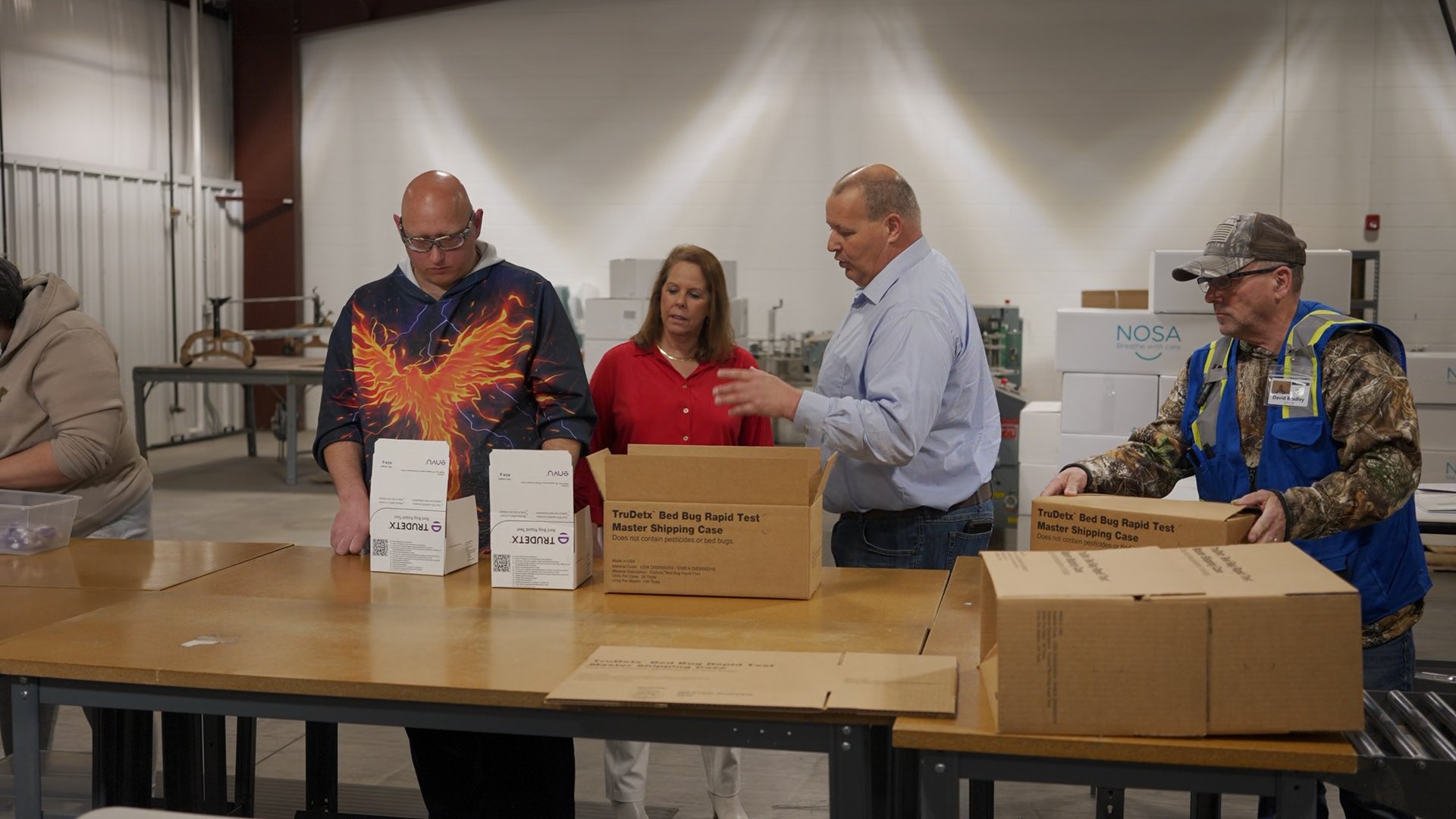
Automated co-packing lines are built to run one thing for a long time. That's not most of the work coming through our doors. Our floor is designed to adapt — new configurations, new components, new retailer specs — without a full retooling cycle.
What "adapt" looks like in practice
• One-piece-flow reengineering when the current flow is the bottleneck (this is the Hollister story).
• Component and staging redesign for kit programs with multiple configurations (this is the RedCoat story).
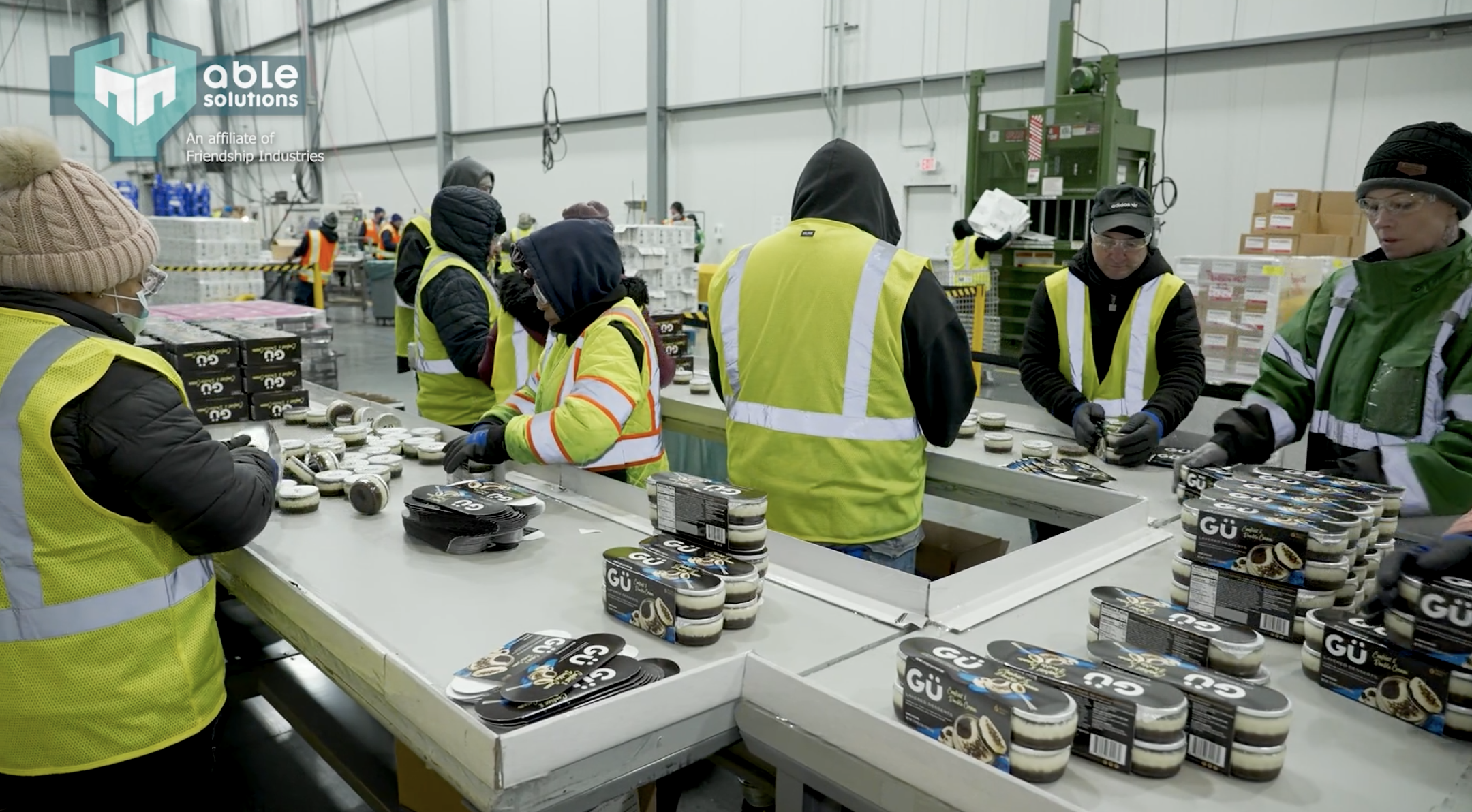
• Packaging reduction and sustainability rework without sacrificing shelf appeal or cold-chain protection (this is the GU Desserts story — 50% packaging reduction to meet the retailer's sustainability target).
• Documentation, lot control, and traceability tuned to the industry the product lives in.
Why this matters
The projects that most co-packers turn down — complex, high-mix, hand-assembly-heavy, tight-timeline — are the projects our floor is built for. That's not a marketing line; it's a design choice.
Accelerate — Move fast without dropping quality
Once the problem is understood and the flow is designed, execution is a rhythm question. Can we hit the date? Can we hold the quality? Can we scale without losing the details that made the pilot successful?
What "accelerate" looks like in practice
• Aggressive launch and compliance dates held, not slipped.
• Ramp from pilot to production without a full restart.
• Ongoing communication — you hear about a risk from us before it becomes a problem.
• Continuous improvement built into the operating rhythm, not saved for a quarterly review.
What we won't do
• Promise a date we don't believe we can hit.
• Absorb complexity we haven't priced honestly.
• Chase unit-cost-only work at the expense of the customers we're already serving well.
The framework in one story
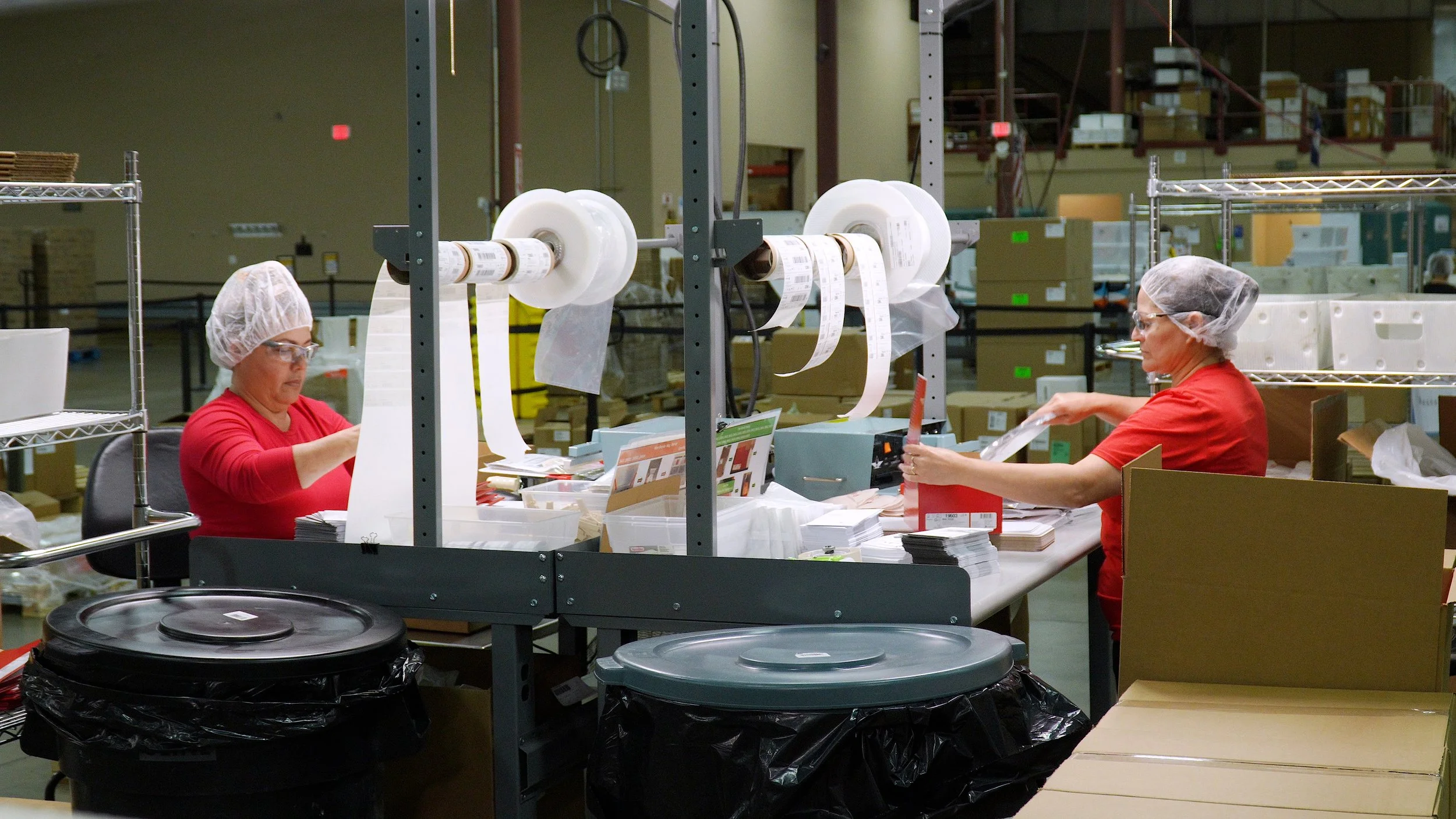
We assessed the whole line — not just the labeling step — and found the real constraint was the wait behind the label, not the label itself.
We adapted the flow to one-piece-flow, preserving every quality and documentation requirement.
We accelerated throughput without adding capital equipment, and the relationship grew from a single project into an ongoing partnership.
That's the pattern. That's the Able Solutions Way.
Start a conversation
The first step is always the same:
a 20-minute discovery call.
Assess is where the framework begins.